Friday, 7 August 2015

Cape Rockjumper WAR!

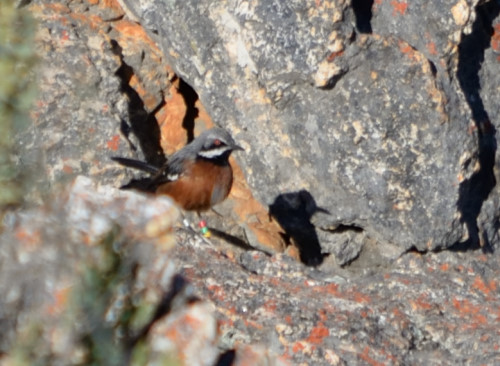
In my previous post I documented a placid Cape Rockjumper release, in this one I document a rare fight sequence. This has been the only one we have observed to date. Mostly the birds are happy to call and display to each - I've never seen a full on fight before.

I had just released a male Cape Rockjumper back where we had caught him and he flew quickly out of sight. However, I heard him calling and decided to get a closer look. His calling was answered promptly by another male close to hand. The interloper was an unringed bird, and must have used the period of the resident males absence to attempt a territory take over. The recently released male was not going to put up with that and quickly flew over to the usurper. A lot of calling, displaying and posturing took place, and then a brief midair full on contact fight occurred.

A period of about 10 minutes of chasing and calling ensued, which took the birds over the valley and out of sight. Birds that we catch are fed up on meal worms and always gain weight - so I'm hoping this was to the residents advantage and things are now back to normal.

Photo quality is poor as these are cropped photos: the action took place a bit far away for nice crisp shots.

realising there is an intruder, the resident male flies in to defend his patch


resident male takes up a prominent display posture

a lot of call and displaying takes place

Aerial combat! the two males clash in mid-air


A more placid male from the neighbouring territory respected the boundaries

Cape Rockjumpers fan their tails to show off

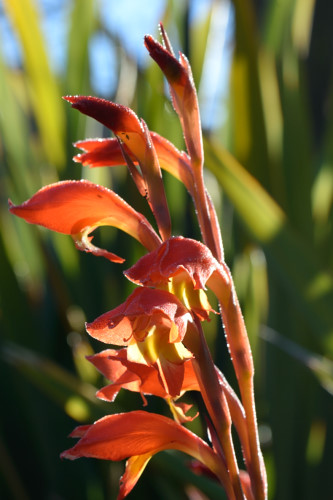
On a more peaceful note, Malachite Sunbirds are back and feeding on the later winter/early spring flowers

Cape Rockjumper release

Krista Oswald's research into the Cape Rockjumper temperature tolerance testing has been going remarkably well, all considered. There have been several days with no bird captures, but then an amazing team of assistants - Gavin, Alacia and Audrey caught 3 on one day. Unlike previous experiments this time we are also testing the low end of what Cape Rockjumpers can handle - it looks like sub zero temperatures are no problem for this species.

Yesterday some radio transmitters were delivered which will enable Krista to continue the behavioural aspects of her work. Some of these results have already been presented at the BOU conference of birds in space and time earlier this year. Basically, there is a tight link between physiology and behavior - birds basically no longer forage once temperatures go beyond 30 degrees.

In the meantime, yesterday and today we had some of Krista's compatriots from Nelson Mandela Metropolitan University visit with her supervisor Ben Smit. This sequence of photos is of the release of the female with the first deployed radio tag. The release went smoothly - she was soon joined by other members of her family group.

Audrey adeptly releases the female Cape Rockjumper

Jumping to freedom

she can't believe she's back home! Where is everyone?

Her boyfriend welcomes her home (and shows off his ringless legs to the researchers).

Another female (sister? mother?) looks on. 

Friday, 19 June 2015

For the Love of the Land (aka volunteers Rock)


Life on a CapeNature stewardship Nature Reserve is a bit different. At least it's hard to compare to other places I've lived across the world, which range from London to the Amazon.

Its beautiful, peaceful, healthy, invigorating. We live surrounded by the entertainment that nature has to offer, marking time by the state of bloom of the flowers on the hills. I wake each day with a feeling of purpose, excited about what the day has in store for me.

But being a custodian of the land is hard work, with few options for generating income. In effect, its a giant land-care hobby: we do it for the love of the land. We spend hours of time maintaining trails, attempting to maintain roads, mediate erosion, and controlling alien plants.

Thankfully, our lifestyle and location does appeal to the young and adventurous. We support a steady stream of volunteers from around the world, who come and help with various projects on a volunteer basis. Payment is food, accommodation, and a chance to explore a true wilderness area while contributing to conservation efforts. Here are some photos of volunteers and their activities.

Last year Jessie (Switzerland) and Adrian (France) got fit and healthy filling sandbags and planting vygies in an area that has not recovered from sheet erosion:


At least the alien black wattle trees are a consistent source of firewood, even if the light wood itself burns a bit fast. Getting the wood into firewood format is a big task:


Over the last month we've had three strong lads volunteering with us: Ivan (Ozzie); Augustin (France); and Brian (South African). We used their muscle power to move tons of rocks to change the route of a track to cross two deep erosion gulleys. These gulleys were the legacy of ploughing of sensitive soils decades ago. The track was routing over the head of these gulleys: sensitive areas where a road was merely exacerbating erosion. The new route now avoids this area, plus the rock bridges across the gulleys will slow down further erosion within the gulleys themselves. This is the culmination of a project that started years ago, where you can also get a better idea of how deep the erosion gulleys are.

photo courtesy of Augustin Calas

photo courtesy of Augustin Calas


On a buttonquail survey some weeks ago we found an isolated pine in a very remote section of the reserve. The three intrepid volunteers headed for the pine on their day off and chopped down another threat to our areas biodiversity.

Photo courtesy of Augustin Calas


The volunteers have also helped us with a variety of research and monitoring tasks. This past summer Christina van Midden, Dean Portelli, Marie Pascal, Ruby and Dan helped us with all day monitoring Cape Rockjumpers. Ruby and Dan transcribed pages of information stored in bird books into spreadsheet format for a meta analysis project that will explore life-history correlates of population declines. Over the last week we've digitized over 25000 photographs from our remote cameras monitoring visitation of nectarivores to proteas, and of a variety of bird species visiting drinking sites. Phoebe Barnard will be reporting on some aspects of these research project at this years Fynbos Forum, to be held in Montagu.


So... a big thank you to all the Blue Hill volunteers that have all helped our conservation and biodiversity actions in some small way, we are most grateful for you help (as are the voiceless species that represent the biodiversity of the Fynbos).   

Sunday, 7 June 2015

Frosty Thyme


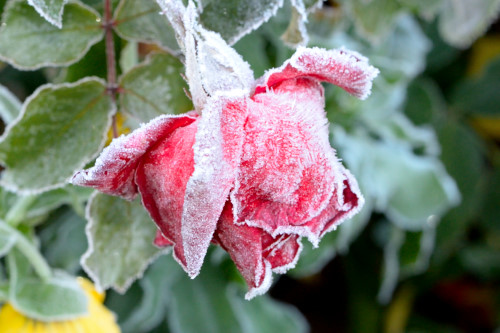
... and origanum, parsley and roses too.

-2 this morning, the first taste of temperatures to come over the next two months.

Here are a few images from the morning:

Frosty Origano


Frosty Rose

Frosty Strawberry leaves

Frosty Parsley

Frosty Dahlia thing

Frosty Thyme
Frosty Pea tendril

Frosty Log


If I wasn't worried about climate change, I'd wish you a warm winter. I'll settle for wishing that you keep yourself warm this winter. 

Tuesday, 2 June 2015

Publication: Bird densities and capture rates from a Mediterranean-type ecosystem

2013 was a year of hard field work. A bit like every year before I guess. But the work of that year was part inspired by the late Phil Hockey. Phil was my supervisor for the first year of my post-doc in 2012, and passed away in January of 2013. Phil was one of South Africa's leading ornithologists, a charismatic and hard working individual much respected in his field.

I have to admit I didn't like Phil at first: he shot down my first post-doc proposal in a hail of bullets. But he only did this to maintain standards at the Percy FitzPatrick Institute: and admittedly I was not up to standard. In fact, I probably made it in because Phoebe Barnard dragged me in by the ear. However, I'm an obstinate fool and I knew what I wanted to do and that it could be done, so I stuck it out. Perhaps it was his quest for Excellence that has shaped what I have achieved so far to date.

One thing that bothered Phil was that during density estimate surveys I would not be detecting all the birds that were in the area and available to be counted. A valid concern, and one that is these days addressed by a variety of statistical techniques. However, since part of my research project was to monitor Cape Sugarbirds in an attempt to see if and how they disperse, he thought that a combined count/ringing technique would help us identify birds that were escaping the counts. So, in 2013 that was what I did: counted birds in formal surveys, informally at the nets, and captured birds on a wide scale.

While a focus of the research was to find out if there were a set of birds that were escaping detection, we did not find this. Instead, changes in bird capture rates at nets were better explained by other things: like placement in relation to resources; and bird size.

However, one useful aspect of the work for me was that I could confirm that there was a relationship between densities and ringing capture rates. This means that all alone here in the wilderness I don't have to count and catch birds: I can concentrate in the meantime on just catching them, as I should be able to track back changes to density for the more common species.

Of course Phil never got to read this publication, but you have the opportunity to do so via:


http://goo.gl/g6ISus


Orange-breasted Sunbird: High capture rates; High densities
Related Posts Plugin for WordPress, Blogger...